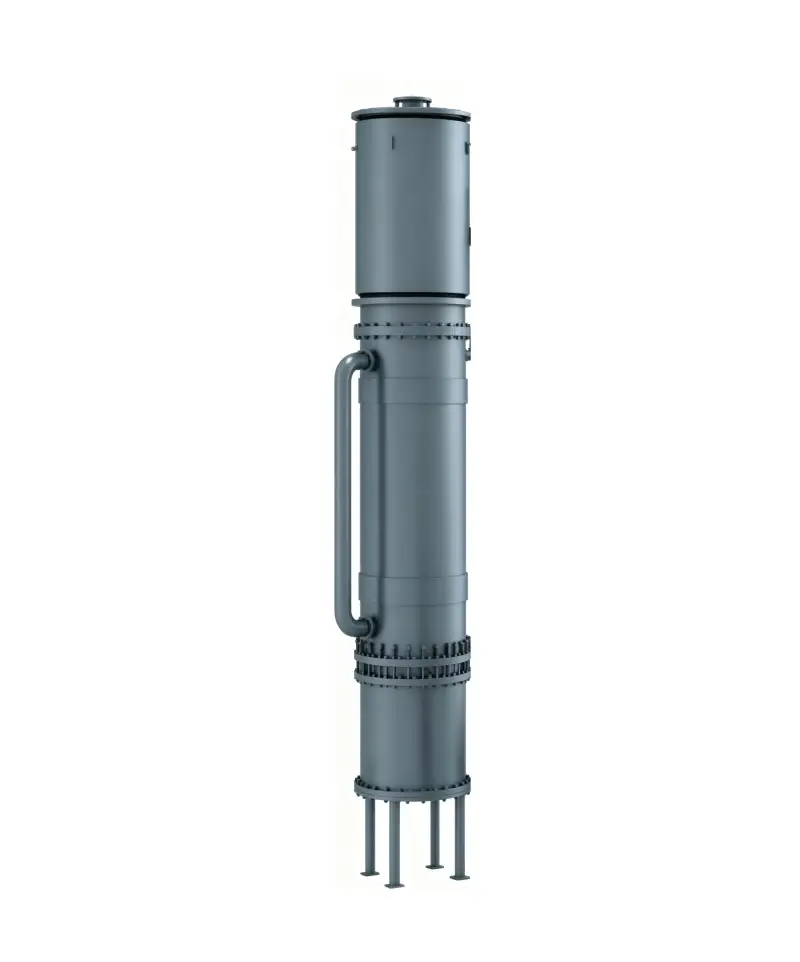
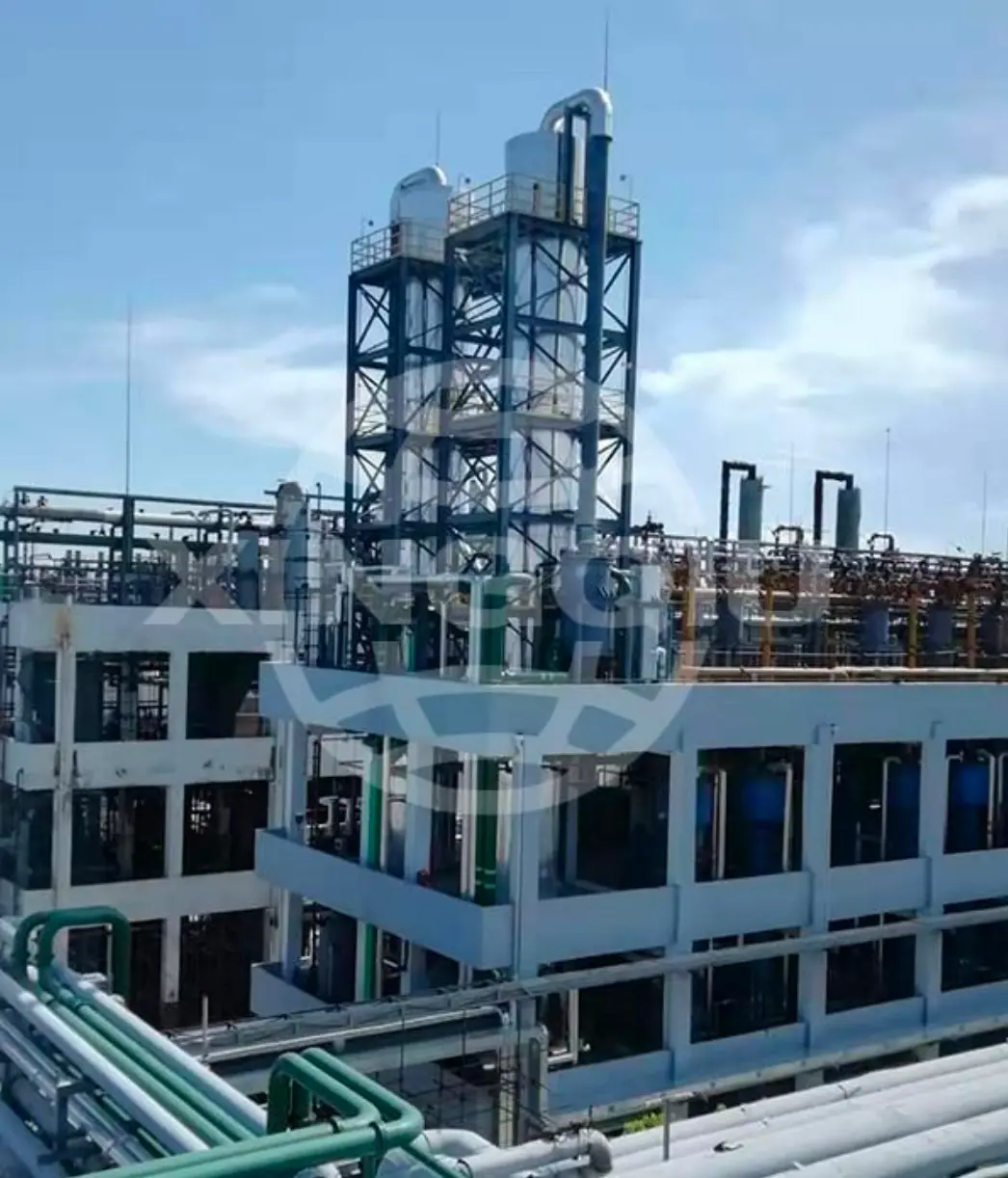
Scope of application
Typical Industries:Chlor-alkali, polysilicon, paper manufacturing, fine chemicals, pesticides, pharmaceuticals, fluorine chemicals, and waste incineration industries requiring waste heat recovery from high-temperature and highly corrosive gases.
Production Capacity:30–400 tons/day of 31% hydrochloric acid, with customized designs available according to process requirements.
Two-in-One Type:Integration of synthesis + cooling absorption (SZL type, STZL type). Compact structure, small footprint, and high-pressure steam by-product generation.
Three-in-One Type:Integration of synthesis + cooling absorption + steam generation (SHL type, SHZL type). Higher integration level, suitable for high-purity hydrochloric acid production.
Four-in-One Type:Integration of synthesis + steam generation + cooling absorption + tail gas treatment (FZHL type). Complete process integration with reduced leakage points.2. Core Components
Mixing Burner:Precisely controls the chlorine and hydrogen mixing ratio to ensure stable combustion and suppress side reactions.
Graphite Synthesis Section:The core reaction zone, featuring high-temperature resistance (wall temperature ≤220℃) and excellent corrosion resistance.
Steam Generation Section:Produces 0.4–1.0 MPa saturated steam on the shell side, achieving up to 90% thermal energy utilization efficiency.
Top Cooling and Absorption Section:Efficiently reduces temperature to below 50℃. Equipped with a liquid distributor to improve absorption efficiency.
Composite Shell Structure:Graphite lining combined with a steel outer shell, providing both mechanical strength and corrosion resistance, suitable for medium and high-pressure conditions (maximum shell-side pressure: 0.8 MPaG).3. Design Highlights
Integrated Design:Synthesis, cooling, absorption, and waste heat recovery are completed in a single unit, reducing pipelines and potential leakage points.
Automatic Control:Equipped with a DCS control system, offering flexible operation, stable performance, and remote monitoring capability.
Thermal Expansion Compensation:Spring compensation structure eliminates thermal stress caused by differences in expansion between graphite components and the steel shell, extending service life.
Performance Characteristics
Medium Conditions
The system is designed for highly corrosive media including chlorine, hydrogen, hydrogen chloride, and hydrochloric acid. No special requirements are required for moisture content in raw materials.
Temperature & Pressure Conditions
Synthesis Section Wall Temperature: ≤220 ℃
Steam Generation Section Temperature: ≤175 ℃
Applicable Operating Pressure: 0.1–0.8 MPaG medium and high-pressure conditions
Process Applications
Chlor-Alkali Industry:
Hydrogen and chlorine generated from brine electrolysis are synthesized into HCl, which is supplied for downstream processes such as PVC and epichlorohydrin production.
Polysilicon / Photovoltaic Industry:
Production of high-purity HCl to meet electronic-grade raw material requirements.
Paper Manufacturing / Environmental Protection:
Treatment of highly corrosive gases and waste heat recovery, reducing energy consumption and emissions.
Capacity Range:
Suitable for applications ranging from pilot-scale systems to ten-thousand-ton-level industrial plants. Customized designs are available to meet different production capacity requirements.
Working Principle
The HCl synthesis furnace operates based on the direct combustion reaction between chlorine and hydrogen to generate hydrogen chloride gas.
Chemical Reaction:
Cl₂ + H₂ → 2HCl
During combustion, a large amount of heat is released. Therefore, during the HCl production process, cooling water is continuously circulated externally to cool the graphite components and maintain safe and stable operation.
Performance Parameters
By-product Steam Pressure: 0.2–0.85 MPa
By-product Steam Generation: 0.65–0.9 tons of steam per ton of hydrogen chloride produced
Hydrogen Chloride Production Capacity:
A single synthesis unit can produce up to 150 tons/day of 100% HCl and can be equipped with an absorption system to produce approximately 36% hydrochloric acid.
Technical Characteristics
| Performance Dimension | Key Indicators | Technical Advantages |
| Corrosion Resistance | Resistant to highly corrosive media such as Cl₂, HCl, and hydrochloric acid | No raw material gas pretreatment required, replacing steel furnaces and reducing maintenance costs |
| Heat Transfer Efficiency | High graphite thermal conductivity, HCl outlet temperature ≤50℃ | Rapid removal of reaction heat and maximized by-product steam generation |
| Waste Heat Recovery | Thermal energy utilization rate ≥90%, producing 0.4–1.0 MPa steam | Annual steam production of approximately 45,000 tons per unit, delivering significant economic benefits |
| Operational Stability | Design pressure range: 0.1 MPaG–0.8 MPaG | Wide operating flexibility, long-term stable operation, and extended service life |
| Environmental Benefits | CO₂ emissions reduction of approximately 11,500 tons/year (based on 50,000 tons/year HCl capacity per unit) | Selected as a national industrial energy-saving demonstration project, supporting dual-carbon goals |